
HANDMADE / 2026
WAVES
A handmade object study inspired by repair, contrast, and the quiet value of imperfection.
01 / OVERVIEW
This object draws inspiration from the iconic visual language of Bauhaus graphics from 1925. The form was first developed as a 3D-printed model, which served as the basis for a negative mold cast in plaster. However, during the process, some of the lines in the printed model proved too delicate for the plaster, leading to imperfections in the mold. These flaws, rather than being mistakes, became an integral part of the object’s character
—turning imperfection into a form of perfection.
BASIC INFORMATION
2026
Handmade
Procreate, Rhino, 3D Printing, Clay, Porcellain, Goldglue
02 / PROCESS
Working with
Porcellain.
The final piece was slip-cast in porcelain, combining the precision of digital design with the tactile depth of handcrafted ceramics. Made from a special material called Mont Blanc porcelain, the lantern is semi translucent and allows light to gently pass through. When a tealight is placed inside, the varying thicknesses of the wave structure begin to glow—bringing the form to life in a dance of flickering light and shadow


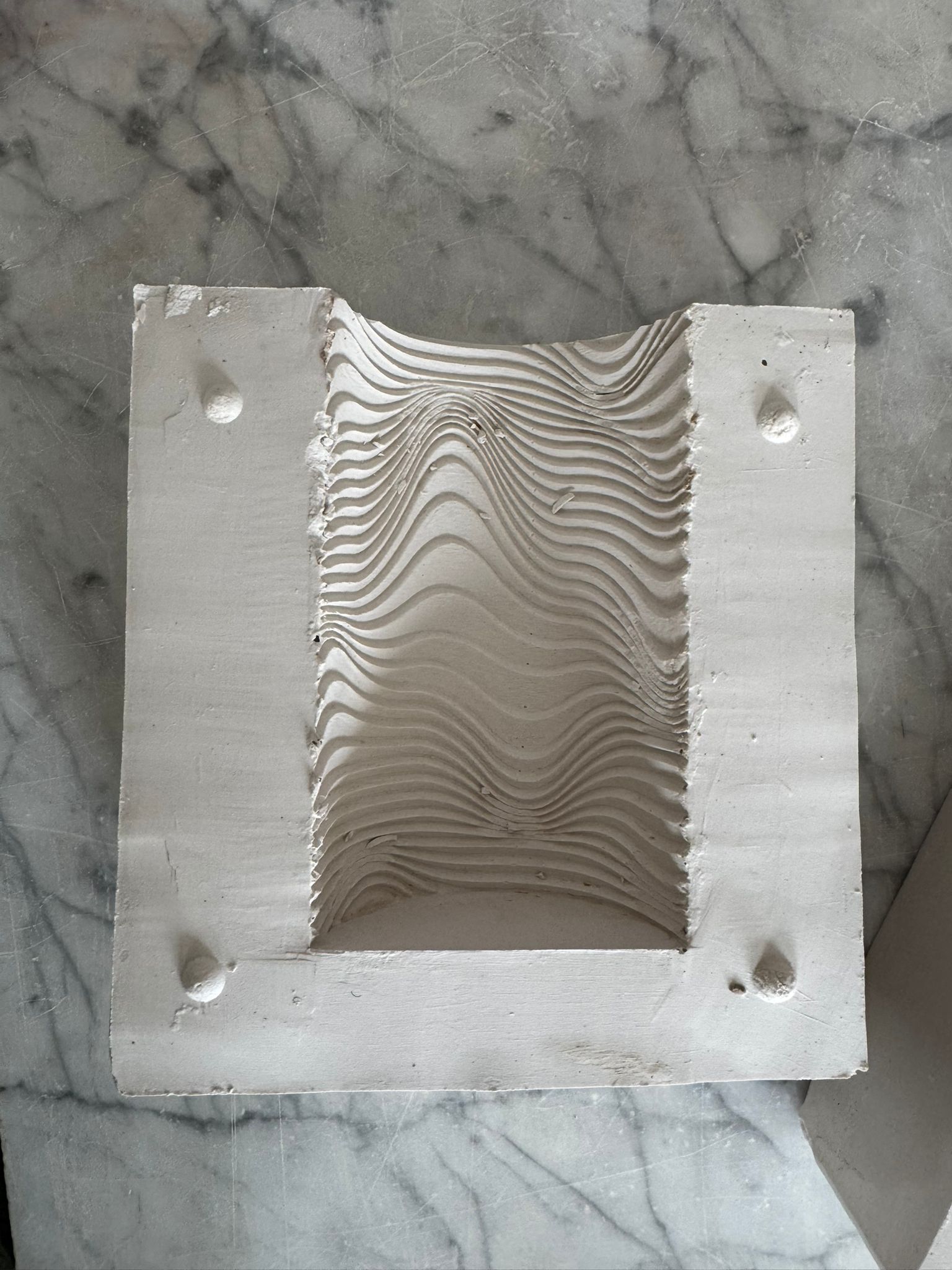
It was my first time working with porcelain, and I underestimated how time-consuming the process would be. But as I lost myself in the details, I discovered a certain meditative rhythm—one that revealed the beauty of patience, material sensitivity, and quiet precision.
Throughout the process, I encountered many small failures — collapsed molds, broken edges, unexpected material behavior. Yet each mistake became part of the learning. Working with porcelain taught me that it takes time to form something perfect, even more so if you never worked in that field before.
This project became not just an object, but a lesson in patience, humility, and creative trust
03 / KINTSUGI
Humility
On my way home, the paper bag carrying the finished porcelain lanterns suddenly ripped open. Half a year's worth of work crashed to the ground and shattered. Rather than seeing it as the end of the project, I embraced the Japanese art of Kintsugi to repair the broken pieces and give them a new story.


04 / FINAL
PEACE
After more than a year of work, I am very proud of the result. It certainly tested my patience, but I believe I managed to create a clean and coherent final piece despite the breakage. Throughout the process, I learned a great deal about working with porcelain and was glad to have the opportunity to apply the traditional Kintsugi technique.
The lanterns work perfectly for their original purpose as candle holders, which is what I initially designed them for.


Let’s make something purposeful.